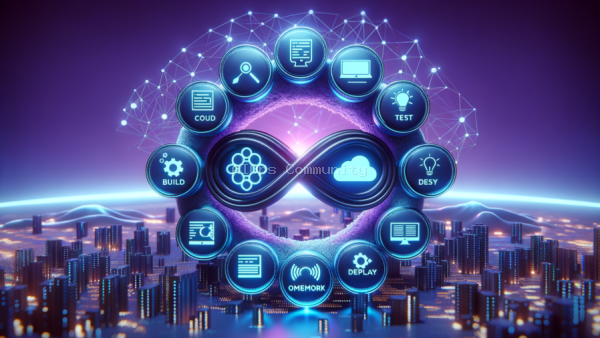

Continuous integration and continuous delivery (CI/CD) pipelines were designed for speed, consistency, and repeatability. Today, they are also becoming high-value targets. As AI-assisted coding, autonomous agents, and generative tooling become embedded into software delivery, the attack surface of modern pipelines is expanding in subtle but profound ways.
Recent supply chain incidents have demonstrated that compromise rarely begins with production systems. Instead, attackers increasingly target build systems, dependency chains, or automation workflows—areas where trust is assumed and verification is often shallow. When AI agents are introduced into this environment—generating code, modifying infrastructure, approving pull requests, or orchestrating releases—the amplification effect can be dramatic.
This is not a call to slow down innovation. It is a call to redesign CI/CD architecture with structural resilience in mind. Patch-level controls are insufficient. What is required is a layered, policy-driven, runtime-aware model that treats AI-enabled automation as both a force multiplier and a potential attack vector.
How AI-Driven Automation Expands the CI/CD Attack Surface
Traditional CI/CD pipelines already operate as privileged orchestration layers. They manage secrets, sign artifacts, trigger deployments, and interact with cloud control planes. Adding AI agents—whether for code generation, test synthesis, dependency updates, or remediation—introduces dynamic behavior into what was once deterministic automation.
AI systems can modify codebases at scale, sometimes across multiple repositories. They can refactor configurations, introduce new dependencies, or generate infrastructure-as-code templates. If their inputs are poisoned or their permissions overly broad, the blast radius extends across environments. Research suggests that prompt injection, model poisoning, and malicious dependency substitution are emerging vectors that exploit this automation layer.
Additionally, agentic systems blur accountability boundaries. When a human engineer merges a change, audit trails are clear. When an autonomous system proposes, validates, and merges changes under delegated authority, governance models must adapt. Without clear identity scoping and policy enforcement, AI agents may effectively operate as privileged insiders.
New Classes of Risk in AI-Enabled Pipelines
- Dependency cascade risk: AI tools often suggest or automatically include external libraries, increasing exposure to compromised packages.
- Privilege amplification: Agents with repository, registry, and cloud permissions can unintentionally bypass segregation-of-duties principles.
- Data leakage through prompts: Build logs, secrets, or proprietary code may be exposed to external inference services if controls are weak.
- Autonomous change velocity: Automation can introduce and propagate vulnerabilities faster than manual review processes can detect them.
Securing CI/CD in this context requires more than adding scanners. It requires rethinking trust boundaries and execution models.
Structural Security Patterns for Hardened Pipelines
Modern pipeline security should be built around containment, verification, and observability. Instead of assuming pipeline components are trustworthy, resilient architectures assume compromise is possible and limit lateral movement.
1. Ephemeral and Isolated Build Environments
Ephemeral runners reduce persistence-based attacks. Each build should execute in a short-lived, isolated environment with no residual state. Network access should be tightly scoped, ideally default-deny, with explicit outbound allowlists. Artifact promotion should require cryptographic verification and attestations rather than implicit trust.
Immutable build images further reduce drift. By versioning and signing base images, organizations create traceability from source to deployment. Evidence indicates that reproducible builds combined with artifact signing significantly strengthen supply chain integrity.
2. Zero-Trust Access Within the Pipeline
Zero-trust principles should apply internally. Pipeline components must authenticate and authorize every interaction. Short-lived credentials, workload identities, and fine-grained role policies prevent long-lived tokens from becoming pivot points.
AI agents require special treatment. They should operate under narrowly scoped service identities, with explicit constraints on repositories, branches, and environments they may modify. Human approval gates can remain in place for high-risk changes, even if AI proposes them.
3. Policy-as-Code Enforcement
Manual review cannot scale with AI-accelerated change velocity. Policy-as-code frameworks allow security, compliance, and operational rules to be enforced automatically at merge, build, and deploy stages.
Examples include:
- Blocking unsigned artifacts from promotion.
- Rejecting infrastructure changes that violate segmentation rules.
- Preventing deployment if dependency provenance cannot be verified.
- Requiring additional review for AI-generated code touching sensitive modules.
Embedding these policies into pipeline logic ensures that enforcement is deterministic and auditable, rather than discretionary.
Runtime Anomaly Detection for AI-Augmented Delivery
Even hardened pipelines can be compromised. Therefore, runtime monitoring must complement preventive controls. In AI-enabled systems, anomaly detection should cover both operational telemetry and behavioral signals from automation agents.
Behavioral Baselines for Pipeline Activity
Establish normal patterns: typical build frequency, dependency changes, artifact destinations, and agent actions. When deviations occur—such as unusual repository modifications, unexpected outbound connections, or atypical artifact signing sequences—they should trigger investigation workflows.
Machine learning models can assist here, but transparency is critical. Security teams must understand what constitutes an anomaly and how models are trained. Opaque detection logic can create blind spots or excessive false positives.
Cross-Layer Telemetry Correlation
CI/CD security cannot operate in isolation. Pipeline logs, cloud audit trails, identity provider events, and container runtime signals should feed into a unified observability layer. Correlating signals across layers often reveals patterns invisible in siloed logs.
For example, an AI agent generating a seemingly benign configuration change may coincide with an unexpected privilege escalation event in the cloud control plane. Individually, each event appears low risk. Together, they indicate possible compromise.
Automated Containment Playbooks
Detection must be paired with rapid containment. Automated responses might include revoking tokens, quarantining build runners, freezing artifact promotion, or requiring manual approval for further pipeline executions. The goal is to limit propagation while maintaining operational continuity.
Importantly, containment workflows should be tested regularly through controlled exercises. Simulated supply chain attacks help validate that controls work under pressure and that roles and responsibilities are clearly defined.
Governance and Human Oversight in Agentic Systems
Technical controls alone are insufficient. Governance models must evolve to address agentic participation in delivery workflows. Clear ownership of AI agent identities, defined approval boundaries, and auditable decision trails are essential.
Organizations may consider maintaining a registry of authorized automation agents, including their permissions, data access scope, and lifecycle policies. Periodic review of these agents—similar to privileged access recertification—helps prevent permission creep.
Equally important is developer education. Engineers should understand how AI-generated changes are validated, how provenance is tracked, and how to identify anomalous behavior. Security culture remains a foundational control, even in highly automated environments.
From Reactive Patching to Resilient Architecture
AI-driven supply chain attacks do not introduce entirely new risks; they amplify existing ones. The speed, autonomy, and scale of AI-assisted development mean that weaknesses in CI/CD design can be exploited more efficiently and with broader impact.
DevSecOps leaders should prioritize structural resilience: ephemeral execution, zero-trust identity, cryptographic provenance, policy-as-code enforcement, and cross-layer anomaly detection. These patterns transform pipelines from implicit trust channels into verifiable, observable systems.
As AIOps continues to merge operational intelligence with delivery automation, the boundary between build-time and run-time security will blur. The organizations that succeed will treat CI/CD not as plumbing, but as critical infrastructure—designed with the same rigor as production systems themselves.
Written with AI research assistance, reviewed by our editorial team.