
Introduction
In the rapidly evolving landscape of software development, integrating security into Continuous Integration and Continuous Deployment (CI/CD) pipelines is no longer optional. With threats like the TeamPCP attacks on the rise, many organizations find themselves at a crossroads between maintaining agility and ensuring robust security. This is where DevSecOps in AIOps comes into play, offering a framework that seamlessly incorporates security into the development lifecycle.
By leveraging the principles of DevSecOps within the AIOps environment, companies can build pipelines that not only deliver software quickly but also safeguard their applications against potential vulnerabilities. This guide delves into the intricacies of creating secure CI/CD pipelines using DevSecOps practices within AIOps, providing you with essential strategies and actionable insights.
Understanding DevSecOps in AIOps
DevSecOps is an evolution of the traditional DevOps approach, integrating security as a shared responsibility throughout the IT lifecycle. When combined with AIOps, which utilizes artificial intelligence to enhance IT operations, this approach can transform security postures. Many practitioners find that this integration helps automate threat detection and response, thus reducing the time spent on manual processes.
AIOps tools can analyze vast amounts of data to identify anomalies and potential threats in real time. This capability allows for proactive security measures, ensuring that vulnerabilities are addressed before they can be exploited. The synergy between DevSecOps and AIOps thus creates a more resilient CI/CD pipeline, capable of adapting to new security challenges as they arise.
Moreover, the incorporation of machine learning algorithms in AIOps enhances the ability to predict potential security breaches, offering a predictive layer of security that is crucial in today’s cyber landscape.
Building Secure CI/CD Pipelines
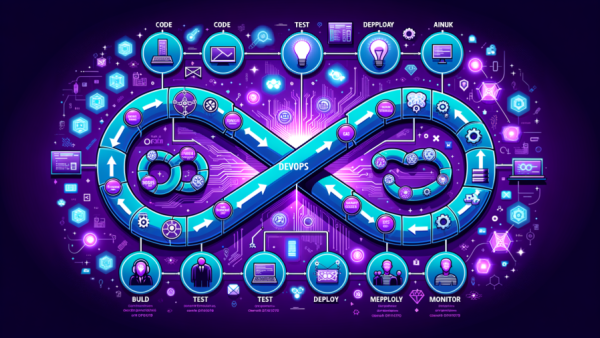
To build a secure CI/CD pipeline, it is essential to integrate security checks at every stage of the development process. This begins with source code management, where static code analysis tools can be employed to identify vulnerabilities before code is even deployed. Evidence indicates that early detection can significantly reduce the cost and effort required to fix issues.
During the build phase, continuous testing should incorporate security tests alongside functional ones. Many practitioners recommend using dynamic application security testing (DAST) tools that simulate attacks on a running application to uncover vulnerabilities in real-world scenarios. Additionally, incorporating software composition analysis (SCA) helps in identifying known vulnerabilities in third-party dependencies.
Deployment is another critical stage where security considerations must be prioritized. Implementing infrastructure as code (IaC) practices can ensure that environments are configured securely from the outset. Containers and orchestration tools, like Kubernetes, should be configured with security in mind, using principles like the least privilege and network segmentation.
Leveraging AIOps for Enhanced Security
Incorporating AIOps into your DevSecOps strategy can significantly enhance the security of CI/CD pipelines. AIOps platforms can automate the monitoring and alerting processes, providing real-time insights into potential security incidents. This automation reduces the time to detect and respond to threats, a critical factor in mitigating damage from attacks.
AIOps can also assist in capacity planning and performance optimization, ensuring that security measures do not compromise the agility of the CI/CD pipeline. By analyzing historical data and usage patterns, AIOps can provide predictive insights that help in resource allocation and risk management.
Furthermore, AIOps can facilitate collaboration across development, operations, and security teams by breaking down silos and providing a unified view of the pipeline’s health and security posture.
Conclusion
Building secure CI/CD pipelines through DevSecOps in AIOps is a strategic imperative for organizations looking to thrive in the digital age. By integrating security into every phase of the development process and leveraging AI-enhanced operations, companies can protect their applications from emerging threats without slowing down their release cycles.
As you embark on this journey, remember that security is not a one-time effort but a continuous process that requires vigilant monitoring and adaptation. By staying informed about the latest trends and best practices, you can ensure that your CI/CD pipelines remain secure and efficient.
Written with AI research assistance, reviewed by our editorial team.