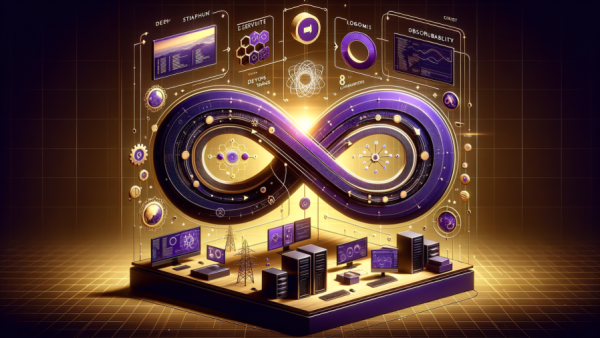

In the constantly evolving landscape of technology, observability has emerged as a cornerstone for DevOps teams and Site Reliability Engineers (SREs). It has evolved from a mere adjunct to monitoring to a sophisticated framework that provides deep insights into system behaviors. But as digital ecosystems become more intricate, the future of observability beckons us to look beyond traditional metrics and logs, integrating advanced techniques and technologies.
Today, observability is not just about reacting to issues. It involves proactively understanding complex systems’ behaviors to ensure reliability and performance. As we stand at the cusp of this evolution, it’s crucial to explore how emerging trends will reshape observability in the coming years.
The Rise of AI-Driven Insights
Artificial Intelligence (AI) is increasingly becoming a pivotal player in the field of observability. Many practitioners find that AI-driven insights can help in identifying anomalies faster and with greater accuracy than traditional methods. AI algorithms can process vast amounts of data in real-time, detecting patterns and correlations that may elude human analysts.
Research suggests that AI can significantly reduce the time to detect and respond to incidents. By leveraging machine learning, observability tools can predict potential failures before they impact users, allowing for preventive measures. This predictive capability is crucial for maintaining uptime and ensuring seamless user experiences.
Moreover, AI can enhance root cause analysis. By automating the correlation of disparate data points, AI helps teams quickly pinpoint the underlying issues, reducing mean time to resolution (MTTR). As AI continues to evolve, its integration into observability platforms is expected to deepen, providing even more powerful insights.
Integrating Trace Data for Holistic Views
While metrics and logs have been the traditional pillars of observability, trace data is rapidly gaining prominence. Tracing provides a granular view of how requests flow through a system, offering a detailed perspective of the interactions between services. This is especially relevant in microservices architectures, where interactions can become complex and non-linear.
Evidence indicates that integrating trace data with metrics and logs can offer a more comprehensive view of system health. This holistic approach allows teams to see not just what happened, but why it happened, facilitating more effective troubleshooting and optimization.
Future observability solutions are likely to focus on seamless integration of these data types, breaking down silos and enabling unified dashboards that offer a single source of truth. This integration will be key to managing the complexity of modern cloud-native environments.
Embracing Open Standards and Interoperability
The push towards open standards and interoperability is another trend shaping the future of observability. With the proliferation of tools and platforms, the need for standardized data formats and protocols has become apparent. Open standards such as OpenTelemetry aim to provide a common framework for collecting and processing observability data.
Interoperability ensures that different tools can work together seamlessly, providing a more cohesive observability strategy. It allows organizations to choose best-in-class solutions without being locked into a single vendor ecosystem. This flexibility is critical for adapting to changing needs and technologies.
As open standards become more widespread, they promise to democratize observability, making it more accessible and effective for organizations of all sizes.
Best Practices for Future-Ready Observability
To prepare for the future of observability, organizations must adopt certain best practices. First, embracing a culture of continuous improvement is essential. Observability should not be a set-and-forget strategy; it requires regular assessment and adaptation to new challenges and technologies.
Second, investing in training and education can empower teams to leverage advanced observability tools effectively. This includes understanding AI algorithms, interpreting trace data, and integrating open standards into existing workflows.
Finally, fostering collaboration between development, operations, and security teams can enhance observability efforts. By breaking down silos and encouraging cross-functional communication, organizations can ensure that observability insights are actionable and aligned with broader business goals.
Conclusion
The future of observability is bright and full of potential. By looking beyond traditional metrics and logs, and embracing AI-driven insights, trace data integration, and open standards, organizations can unlock new levels of system understanding and reliability. As observability continues to evolve, staying informed and adaptable will be key to harnessing its full power.
Written with AI research assistance, reviewed by our editorial team.