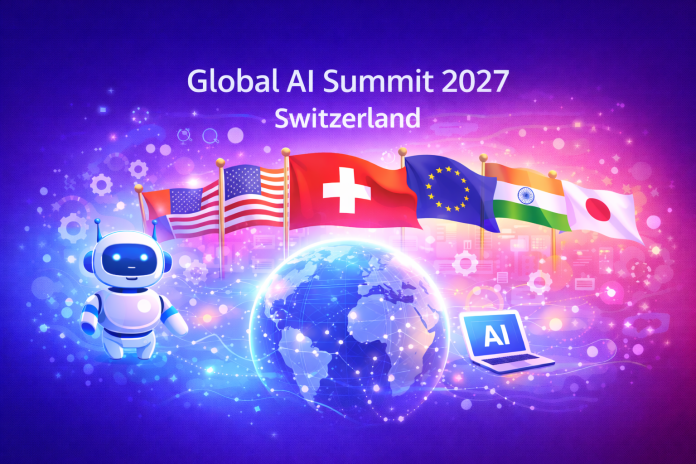

The Global AI Summit 2027 is set to take place in Switzerland, positioning the country as a central meeting point for global discussions on artificial intelligence, governance, innovation, and economic impact.
The decision reflects Switzerland’s growing reputation as a neutral, innovation-friendly hub for technology policy, research collaboration, and international cooperation, particularly in areas involving advanced and emerging technologies.
A Global Platform for AI Leadership
The Global AI Summit brings together policymakers, technology leaders, researchers, enterprise executives, and regulators from around the world to discuss how AI is shaping economies, societies, and global competitiveness.
The 2027 edition is expected to focus on:
-
Responsible and trustworthy AI
-
AI governance and international regulation
-
Enterprise and industrial AI adoption
-
AI’s role in economic growth and productivity
-
Cross-border collaboration on AI research and standards
With AI increasingly influencing national strategies and global power dynamics, the summit aims to encourage dialogue that balances innovation with accountability.
Why Switzerland Was Chosen
Switzerland’s selection as host underscores its strengths in research excellence, political neutrality, and strong regulatory institutions. The country is home to a robust ecosystem of universities, research centers, multinational organizations, and technology companies, making it a natural venue for global AI dialogue.
Its long-standing role in hosting international forums and diplomatic negotiations also makes Switzerland well-suited for discussions that require global consensus and cooperation.
Focus on Trust, Governance, and Collaboration
A key theme of the Global AI Summit 2027 is expected to be trust in AI systems. As AI adoption accelerates across governments and enterprises, concerns around transparency, accountability, safety, and ethical use are becoming increasingly prominent.
The summit is likely to explore frameworks that enable innovation while ensuring AI systems are aligned with societal values and legal norms. Topics such as AI safety, data governance, and cross-border regulatory alignment are expected to feature prominently.
Enterprise AI and Economic Impact
Beyond policy discussions, the summit will also highlight real-world AI deployment across industries including finance, healthcare, manufacturing, energy, and public services. Enterprise leaders are expected to share insights on scaling AI responsibly while delivering measurable business value.
With AI projected to contribute trillions of dollars to the global economy over the next decade, the event will examine how countries and organizations can maximize economic benefits while managing risks.
Strengthening Global AI Cooperation
As AI development becomes increasingly global, no single country or organization can address its challenges alone. The Global AI Summit 2027 aims to strengthen international collaboration, encouraging shared standards, best practices, and research partnerships.
By hosting the event, Switzerland reinforces its role as a facilitator of global cooperation in an era where AI is reshaping geopolitical, economic, and technological landscapes.
Looking Ahead
The Global AI Summit 2027 is expected to be a landmark event, bringing together diverse stakeholders to shape the future of AI at a global level. As AI continues to evolve from experimental technology to critical infrastructure, platforms like this summit will play a vital role in defining how AI is governed, deployed, and trusted worldwide.